After a long trip by road across 500
kilometres of central India I arrived at nighttime at the town of Sanchi. Next
morning I was up early to visit the 2,200 year old Buddhist stupas sitting on
the top of a hill. The carvings on the gateways is superb. Over the centuries various
monasteries have been built and then collapsed. The stupas were originally
built by Ashoka who also built a column with 4 lion heads at the top which has
now become the national symbol of India.
8 JAN 2012 BHOPAL GLOBAL STUDIO
From Sanchi it is only an hour to the city of Bhopal where the Global Studio conference was being held. I was a speaker at the conference with a paper based on my research topic. The Global Studio is organised by the University of Sydney and the local School of Architecture in Bhopal. Accommodation was in another converted palace.
The 3 day conference was about inclusive
urbanism and a number of the speakers were useful for my research. More detail
of the conference is at www.theglobalstudio.com Renu Koshla was one of the speakers. I will outline the
material from others below. My presentation got picked up by The Times of India
who had a page 2 article titled, "WOMEN PLAY KEY ROLE IN SLUM RENEWAL".
8 JAN 2012 BHOPAL SHEELA PATEL
Sheela was one of the speakers at the
Global Studio conference and she is the head of an NGO called SPARC which works
closely with the National Slum Dwellers Federation (NSDF) improving the slums of India. I had a good talk to
Sheela after her presentation. She believes that the planning system ignores
informality and is very top down rather than bottom up. She is particularly
keen to encourage the improvement of slums insitu rather than through
rebuilding. Sheela is not an architect and she says she "loves to hate
architects and planners" who she sees as being too concerned about design
issues. She
is also concerned about engineers who want
to line everything up in rows rather than allowing more informal and organic
layouts. Sheela is also critical of some of the National Government programs to
improve slums.
9 JAN 2012 BHOPAL ANUPAMA KUNDOO
Anupama is an architect who has worked in
India and in England. She is also involved in teaching architecture and is
about to take up a position at the University of Queensland. Anupama was
critical of the position taken by Sheela Patel as being dismissive of of design
as a tool in slum renewal. She presented many projects she had designed in
India that used traditional materials and traditional crafts. She was concerned
about the over use of less sustainable materials like concrete in so many Indian
buildings rather than the use of clay. Anupama demonstrated a roof system using
terracotta interlocking pots. Her approach is very much against the formal
Public Works type of construction. www.anupamakundoo.com
10 JAN 2012 BHOPAL MOSQUES AND TEMPLES
I spent some time exploring and sketching
the old quarter of Bhopal located near one of the two lakes the city is built
around. Bhopal became infamous from the disastrous Union Carbide chemical
leakage in the 1980's that killed many people. The factory sits as a relic on
the outskirts of town. The old quarter has a fine mosque called the Jama Masijd
that is the biggest in India exceeding with its massive courtyard even the
Delhi Jama Masjid. I spent some time drawing the mosque with its washing pool
and one large mango tree. I also drew a very nice smaller mosque called the
Jama Moti and a fine Hindu Shiva temple 18 kilometres outside Bhopal with a 2.4
metre high stone carved lingam as its centrepiece.
11 JAN 2012 AHMEDABAD CITY FORM CONFERENCE
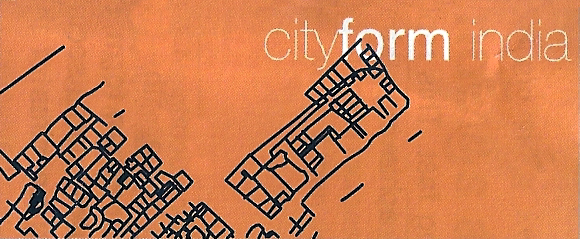
This conference was focused on "Achieving Sustainable Urban Form for Indian Cities". It was held at the Centre for Environment, Planning and Technology (CEPT) in Ahmedabad in buildings designed by Doshi. The conference was also organised by NIUA with its Director Chetan Vaidya present, the School of Planning and Architecture from New Delhi and the University of Oxford Brooks from the United Kingdom.
The presentations included detailed
studies of two mid sized towns -- Fairadabad outside Delhi and Rajkot in
Gujurat. In Rajkot many families had small houses with a maximum of 50 square
metres in a 2 storey building. The overall density of the town is 133 people
per hectare with the old quarter getting up to 300 people per hectare. The Floor
Space Index (FSI) is from 0.66:1 to 1.5:1. Similar research was presented for
Faridabad. I met a number of key people at the conference including the Dean of
Planning from CEPT Professor Utpal Sharma and a number of key women who I was
able to interview in the following days.
12 JAN 2012 AHMEDABAD OLD CITY
In Ahmedabad I was staying at the house of architects Nimish Patel and Parul Zahervi and would travel into the old city by auto rickshaw. These little green and yellow vehicles dart through the bigger traffic of trucks and cars and are incredibly cheap. I drew a street full of auto rickshaws from the city's oldest mosque. The annual kite festival was on and small kids were on every rooftop flying brightly coloured kites. I also visited the Calico Museum which houses a beautiful collection of fabrics collected by the Sarabhai family who also brought Louis Kahn and Le Corbusier to Ahmedabad to design key buildings. They also encouraged the Indian Government to get Charles and Ray Eames to come to India to look at Indian craft and ways to keep these traditions going. The old city is filled with remnants of old walls and 400-year-old mosques.
Subscribe to:
Posts (Atom)