 |
| Indian Cities are full of contrasts between ancient traditions and a fast moving future |
BLOG OF A TRIP TO INDIA IN EARLY
2012 BY CHRIS JOHNSON TO RESEARCH THE ROLE OF WOMEN ARCHITECTS IN DRIVING SLUM
RENEWAL IN INDIA. THE RESEARCH IS THE RESULT OF A BYERA HADLEY TRAVELING SCHOLARSHIP
FROM THE NSW ARCHITECTS REGISTRATION BOARD.

3 JAN 2012, NEW DELHI, CHETAN VAIDYA

Chetan Vaidya is the Director of the National Institute of Urban Affairs (NIUA) based in New Delhi. I have worked with Chetan on two previous books on Indian urbanism and attended a number of conferences with him. He has an important role in overviewing urban planning across India. We discussed the governments programs that relate to slum renewal. These include the Jawal Nehru National Urban Renewal Mission (JNNURM) and specific program on slum rennewal called Rajiv Awas Yojana (RAY). Chetan outlined a project that NIUA was undertaking to compare a slum renewal project in Bhopal with one that had no renewal and to measure issues like health, income, jobs etc. We discussed this with the project officer involved.
Chetan also outlined the role of the
Ministry of Housing and Urban Poverty Alleviation (HUPA) and its programs. Much
of the detailed work on actual projects is delegated to Urban Local Bodies
(ULB). Chetan believed that the role of women in slum renewal was improving and
that NIUA worked with many women from NGO's and architects and planners. On previous
trips to India Chetan had put me in touch with Renu Koshla and Manvita Baradi
who I had met previously and would be again as part of my current research.
3 JAN 2012, NEW DELHI LODI TOMBS

In New Delhi I stayed at the delightful
Lutyens Bungalow one of the buildings from the early twentieth century work on
the new capital. It is like a family home with a pleasant garden. Within a few
minutes walk are the superb Lodi tombs from 1440 set within the very green Lodi
Gardens. The gardens are filled with early morning and evening walkers and
joggers including groups who have loud communal laughing sessions. The tombs
are beautiful stone buildings with inlays of coloured tiles. I have often drawn
these buildings and did so again on this trip.
4 JAN 2012, NEW DELHI RENU KOSHLA

I met with Renu Koshla, the head of the
Centre for Urban and Regional Environments (CURE) in suburban Delhi. I have
visited Renu before and had visited some of the projects she is working on. We
had a long discussion about the role of women architects and planners and the role
of women generally in India. Renu is not an architect but works with architects
and planners closely. Her concern is that architects and engineers are trained
to work on big projects and not the iterative processes that slum renewal
requires.
Renu believes that slum renewal requires a
micro design approach and a problem solving process of many small parts. She
believes that officials from Municipal Corporations can be patronizing and that
they tend to force designs for slum renewal into formal grid like patterns. This
is very different to the organic patterns that evolve in slums and villages.
Indian slums represent 18-19% of the
Indian population with 40% of Delhi's population living in slums. Renu prefers
to improve slums in situ but this is often difficult because of the poor
quality of construction and of materials. In the village of Kachhpura in Agra CURE
have improved the slums in situ but at Savda Ghevra the Delhi Municipal Corporation
had relocated slums to a city edge site and CURE's role was to help improve
conditions.
4 JAN 2012, NEW DELHI SAVDA GHEVRA

I visited the slum resettlement town of
Savda with some of CURE's staff and saw on the ground how CURE is working to
improve conditions and to find work opportunities particularly for women. Savda
has a fairly formal layout with narrow straight streets with small (16 or 12 sq
m) blocks that houses are built on. The cheapest houses are of a woven matting
for walls while the better ones have brick walls rendered. There is no sewer,
no toilets in houses although a common block has been built but most people seem
to defecate in the open space. There is no fresh water apart from tankers that arrive
once a day and distribute drinking water.

It does seem incredible that the Savda settlement
is seen as a slum renewal as conditions are clearly substandard. CUREs
initiatives include a door-to-door waste collection system, vermi composting of
waste, women making fabric bags, water bulbs to give natural light into dark
rooms, water supply projects, shared septic tanks and many more. Against the
odds the conditions are slowly improving.
 |
| Water light |
A new group of small two storey houses has
recently been completed by CURE who designed these with architecture students
from the Delhi School of Planning and Architecture (SPA). These have a good use
of space and are setting some new standards.
5 JAN 2012, AGRA, KACHHPURA VILLAGE SLUM

I was driven to Agra where I visited
CURE's offices in a very confusing Municipal Corporation building and we then
went out to the village of Kachhpura which is a slum settlement located across
the river from the Taj Mahal. To generate income for the improvement of the
village tourist tours are offered where local villagers take groups through the
village.

I did this and found it a fascinating tour
where monuments appeared in amongst the bustle of the village. I even watched a
play performed by local women. Money from these tours is funding a program of
toilets being installed and to date 145 have been completed. Students of Architecture
from the London Polytechnic come and work in the village each year. The latest
CURE project is a Decentralised Water Treatment System (DEWATS) which cleans
dirty water running into the village.

CURE is looking at a citywide approach to
improving all the slums in Agra. They have found that the wells and tanks
installed by the Moghuls can be cleaned up and help with the improvement of the
slums.
6 JAN 2012 GWALIOR FORT

After Agra I went to the city of Gwalior
and stayed in a converted palace that had beautiful gardens around it. Way
above the town is the fort which appeared occasionally through the winter mist.
I explored the fort with its temples and palaces surrounded by a wild
landscape.
The trip to Gwalior was across flat
countryside with lots of camels, peacocks and the occasional vulture.
7 JAN 2012 SANCHI BUDDHIST STUPAS


After a long trip by road across 500
kilometres of central India I arrived at nighttime at the town of Sanchi. Next
morning I was up early to visit the 2,200 year old Buddhist stupas sitting on
the top of a hill. The carvings on the gateways is superb. Over the centuries various
monasteries have been built and then collapsed. The stupas were originally
built by Ashoka who also built a column with 4 lion heads at the top which has
now become the national symbol of India.
8 JAN 2012 BHOPAL GLOBAL STUDIO

From Sanchi it is only an hour to the city of Bhopal where the Global Studio conference was being held. I was a speaker at the conference with a paper based on my research topic. The Global Studio is organised by the University of Sydney and the local School of Architecture in Bhopal. Accommodation was in another converted palace.
The 3 day conference was about inclusive
urbanism and a number of the speakers were useful for my research. More detail
of the conference is at www.theglobalstudio.com Renu Koshla was one of the speakers. I will outline the
material from others below. My presentation got picked up by The Times of India
who had a page 2 article titled, "WOMEN PLAY KEY ROLE IN SLUM RENEWAL".


8 JAN 2012 BHOPAL SHEELA PATEL

Sheela was one of the speakers at the
Global Studio conference and she is the head of an NGO called SPARC which works
closely with the National Slum Dwellers Federation (NSDF) improving the slums of India. I had a good talk to
Sheela after her presentation. She believes that the planning system ignores
informality and is very top down rather than bottom up. She is particularly
keen to encourage the improvement of slums insitu rather than through
rebuilding. Sheela is not an architect and she says she "loves to hate
architects and planners" who she sees as being too concerned about design
issues. She
is also concerned about engineers who want
to line everything up in rows rather than allowing more informal and organic
layouts. Sheela is also critical of some of the National Government programs to
improve slums.
9 JAN 2012 BHOPAL ANUPAMA KUNDOO

Anupama is an architect who has worked in
India and in England. She is also involved in teaching architecture and is
about to take up a position at the University of Queensland. Anupama was
critical of the position taken by Sheela Patel as being dismissive of of design
as a tool in slum renewal. She presented many projects she had designed in
India that used traditional materials and traditional crafts. She was concerned
about the over use of less sustainable materials like concrete in so many Indian
buildings rather than the use of clay. Anupama demonstrated a roof system using
terracotta interlocking pots. Her approach is very much against the formal
Public Works type of construction. www.anupamakundoo.com
10 JAN 2012 BHOPAL MOSQUES AND TEMPLES


I spent some time exploring and sketching
the old quarter of Bhopal located near one of the two lakes the city is built
around. Bhopal became infamous from the disastrous Union Carbide chemical
leakage in the 1980's that killed many people. The factory sits as a relic on
the outskirts of town. The old quarter has a fine mosque called the Jama Masijd
that is the biggest in India exceeding with its massive courtyard even the
Delhi Jama Masjid. I spent some time drawing the mosque with its washing pool
and one large mango tree. I also drew a very nice smaller mosque called the
Jama Moti and a fine Hindu Shiva temple 18 kilometres outside Bhopal with a 2.4
metre high stone carved lingam as its centrepiece.


11 JAN 2012 AHMEDABAD CITY FORM CONFERENCE
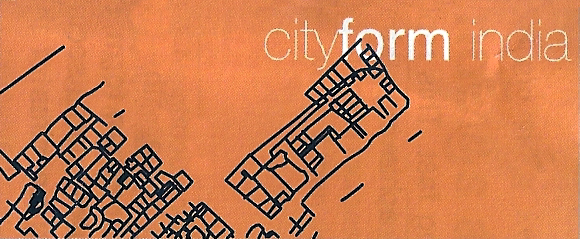
This conference was focused on "Achieving Sustainable Urban Form for Indian Cities". It was held at the Centre for Environment, Planning and Technology (CEPT) in Ahmedabad in buildings designed by Doshi. The conference was also organised by NIUA with its Director Chetan Vaidya present, the School of Planning and Architecture from New Delhi and the University of Oxford Brooks from the United Kingdom.
The presentations included detailed
studies of two mid sized towns -- Fairadabad outside Delhi and Rajkot in
Gujurat. In Rajkot many families had small houses with a maximum of 50 square
metres in a 2 storey building. The overall density of the town is 133 people
per hectare with the old quarter getting up to 300 people per hectare. The Floor
Space Index (FSI) is from 0.66:1 to 1.5:1. Similar research was presented for
Faridabad. I met a number of key people at the conference including the Dean of
Planning from CEPT Professor Utpal Sharma and a number of key women who I was
able to interview in the following days.
12 JAN 2012 AHMEDABAD OLD CITY


In Ahmedabad I was staying at the house of architects Nimish Patel and Parul Zahervi and would travel into the old city by auto rickshaw. These little green and yellow vehicles dart through the bigger traffic of trucks and cars and are incredibly cheap. I drew a street full of auto rickshaws from the city's oldest mosque. The annual kite festival was on and small kids were on every rooftop flying brightly coloured kites. I also visited the Calico Museum which houses a beautiful collection of fabrics collected by the Sarabhai family who also brought Louis Kahn and Le Corbusier to Ahmedabad to design key buildings. They also encouraged the Indian Government to get Charles and Ray Eames to come to India to look at Indian craft and ways to keep these traditions going. The old city is filled with remnants of old walls and 400-year-old mosques.
12 JAN 2012 AHMEDABAD NATIONAL INSTITUTE OF DESIGN

I was encouraged by a number of local
architects to visit the National Institute of Design (NIA) that was set up in
1960 following recommendations from Charles and Ray Eames in their report to
the Indian government. The exhibition the Eames brought to India of modern furniture
in 1956 is still on display. In the library I tracked down the original report by
the Eames of April 1958. This was a seminal document that championed the role
of design through traditional crafts including pottery, painting, stonework,
carving and textiles. The report said architects were best placed to lead the
use of traditional design skills into the future but this was "in spite of
their training" which they saw as "cliché" driven.
12 JAN 2012 AHMEDABAD MANVITA BARADI

I met with Manvita Baradi the Director of
the Urban Management Centre (UMC) and an architect to discuss the role of women
architects in India. She believes that Indian planning is very male dominated
with most city Commissioners being male. When public meetings are being held
the women are often encouraged to stay at home. Manvita undertook a detailed
heritage study for the city of Surat which was commissioned by one of the few
women commissioners. Manvita is currently working on a slum policy for the state
of Surat that will examine issues like tenure, health and social security. A
big problem in Ahmedabad is that slum renewal projects often relocate people
far from work opportunities.
Manvita believes that male planners tend
to produce very rigid layouts for slum resettlements. UMC is currently working
on 7 small cities in Madhya Pradesh which have tourist potential. The problem
has been to find accurate maps. For one city the only map the authorities could
find was dated 1835. UMC is also working on a village outside Mumbai with 11
temples and developing guidelines to ensure their character is protected.
13 JAN 2012 AHMEDABAD MEGHAL ARYA

Meghal is an architect working and
teaching in Ahmedabad. I had met her at the Bhopal Global Studio conference and
sat next to her on the flight from Bhopal to Ahmedabad. At the conference she
presented her work which included some very sensitive building designs. I
visited her at her office along with her husband where they went through a number of their projects. Meghal's mother
is a well known heritage architect and she has prepared some excellent studies
with Meghal on the conservation of specific heritage precincts. We also
discussed the approach of students at CEPT.
13 JAN 2012 AHMEDABAD MADHAVI DESAI

Madhavi Desai is the author of the book "Gender and the Built Environment in India" and is currently writing another book on Indian women architects. I met her at the CITY FORM conference and arranged to meet her at her architectural office she has with her husband Miki Desai. Together they have written a number of books on Indian architecture including one with Jon Lang from the University of New South Wales. Madhavi supported my thesis that women architects were more likely to be better at bottom up inclusive approaches to working with the urban poor than men.
Madhavi teaches and she indicates that at
least 50% of students of architecture in India are now women. Parents are
encouraging their children, particularly women, to get into professional roles.
She believes that India is a very patriarchal society and and that gender is
ignored in most architecture courses. Madhavi explained to me the strong role of
Gita Sarabhai in Ahmedabad as woman driving a focus on design. Few women architects
end up as directors of practices and many become involved in heritage and conservation.
She believes that most Indian architecture graduates are still very influenced
by the image of the STAR architect.
13 JAN 2012 AHMEDABAD PARUL ZAVERHI

I was staying in Parul's house with her
architect husband Nimish Patel. I visited Parul in their architectural office
where they were working on a large competition. Parul outlined the general rise
of the role of women in various professions beginning with health. Her own career
has focused on working with communities and crafts people to harness their skills.
She designed a new hotel in Udairpur that employed 300 craftspeople for 3
years. In Jaipur she developed a heritage plan for the small city of Amber and
developed the role of culture with festivals that led to the well-known Jaipur
Writers Festival.
The Sarabhai family in Ahmedabad has
encouraged the use of traditional skills and Parul is close friends with Malika
Sarabhai. This led to Parul's interest in the use of stone and other natural
materials. She and Nimish now design buildings that reflect the continuity of India’s
traditions often with many designers so the end product is not the vision of
only one person. She says "It is the anonymous architects that are the
strength of India."


16 JAN 2012 PUNE AND SANGLI PRATIMA JOSHI

Having flown from Ahmedabad to Mumbai due
to problems with connections I ended up getting a car up into the hills to
Pune. On Monday morning I was picked up from my Pune hotel by architect Pratima
Joshi to drive 4 hours south to the city of Sangli. Pratima has a regular
Monday evening meeting with the commissioner of the Sangli Municipal Corporation
to discuss progress of the citywide plan for slum renewal. As we travel Pratima
explains the difficulty of making projects happen because of the Indian red
tape system. It seems the Sangli project has been on and off a number of times
until the chief Commissioner of the state of Maharashtra intervened and used
his influence to make the project happen with the Monday meeting as one of the
conditions.
Pratima seems to have an endless battle
with officials and just keeps going. She established SHELTER ASSOCIATES in 1993
after completing a masters degree in the United Kingdom that inspired her to work
with communities. Her key approach is to see slum renewal as an integral part
of the planning of the whole city rather than focusing on individual projects
alone. While Pratima is an architect she works as a social worker and as a project
manager and as an advocate for the poor. Her office includes architects and social
workers.
Pratima is driving a number of slum
renewal projects that are building new housing in 3 or 4 storey clusters of
houses around common shared space. She has got women involved in the design and
the construction of the housing. She has also developed work opportunities for
women making bags for sale. I spent 4 days with Pratima and she is an incredible
role model of how an architect can improve housing for the poor in India. She
finds that Indian architectural graduates are not so interested in working in
her office but she has a steady stream of international students and graduates
who have and are working in her office.
Subscribe to:
Posts (Atom)